Tuesday, September 30, 2014

Allah 'Unlimited' by Reason?

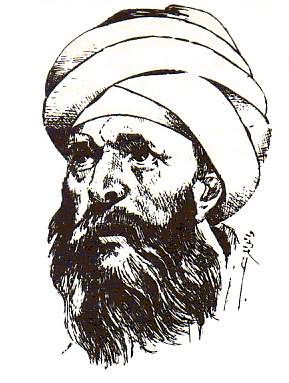
Ibn Hazm
Cordoba, Spain

I offer today another explanation by James V. Schall of theological voluntarism, which he expressed in an article titled "Regensburg Revisited: The Roots of Islamic Violence" (The Catholic Thing, October 1, 2013):
In its Muslim form, [theological voluntarism] . . . seems to be rooted in al-Ghazali and in Ibn Hazm, to whom Benedict referred. In Islam, the notion that God is limited by anything, even His own decrees or reason, is seen to be an insult to Allah. Allah can do the opposite of what he commands. He can call good evil and evil good. He is under no obligation to reveal truth to man. And if he does, he can change his mind and will the opposite later on. These positions are spelled out carefully in the Regensburg Lecture.

Thus, the philosophic root of violence means that such violence used to convert people is perfectly legitimate if Allah commands it, which he appears to do. To deny this possibility as "irrational" would be itself to blaspheme. We would claim that reason could limit the freedom of Allah to which we are to submit ourselves as the only reality to which we need to pay attention.
A question arises: Do al-Ghazali and in Ibn Hazm speak for Islam itself in their understanding of Allah's nature as arbitrary will?

Labels: , , , ,

Tuesday, September 01, 2009

Sheikh Yousuf Al-Ahmad: "cast fear in the hearts of Allah's enemies"

Sheikh Yousuf Al-Ahmad
(Image from Memri Blog)

The very useful Memri folks who translate statements made by Islamists have provided a clip with English subtitles (as well as a transcript) of the statements in an interview uttered by a professor of Islamic law at Al-Imam University in Riyadh, Sheikh Yousuf Al-Ahmad, expressing hardline opinions concerning -- among other topics -- the owners of 'liberal' Saudi television channels, e.g., Al-Walid bin Talal. He maintains that they "should be tried in an Islamic court of law and sentenced to death."

When challenged by the interviewer, who insisted that "Islam is a religion of tolerance and leniency," Al-Ahmad retorted:
Allah says otherwise. Islam is lenient, but the infidel West trembles in fear of it. Allah has ordered us to prepare: "Prepare for them what force and steeds of war you can, to cast fear in the hearts of Allah's enemies and of your own." Our human nature may tell us that stoning is unacceptable, but this is a punishment decreed by Allah. If Allah decrees death -- this is how it should be. If the Islamic scholars ruled that the punishment for drug dealers is death, this is how it should be.
Al-Ahmad seems to be citing the Qur'an, "Al-Anfal" 8:58-59:
58 Let not the unbelievers think that they can get the better (of the godly): they will never frustrate (them). 59 Against them make ready your strength to the utmost of your power, including steeds of war, to strike terror into (the hearts of) the enemies, of Allah and your enemies, and others besides, whom ye may not know, but whom Allah doth know. (Yusuf Ali Translation)
The sura "Al-Anfal" is understood as referring generally to the spoils of war, but from Al-Ahmad's interpretation -- and, indeed, from the above verses -- "war" would appear to be quite broadly defined.

Be that as it may, Al-Ahmad's remark on the necessity of carrying out Allah's decrees no matter what we might think about them suggest that he is of the opinion that Allah could order anything at all, no matter how cruel, and we would be compelled to carry it out or face the consequences -- a position remarkably similar in principle to that expressed by Ibn Hazm, who held that "God is not bound even by his own word, and that nothing would oblige him to reveal the truth to us. Were it God's will, we would even have to practise idolatry" (Pope Benedict XVI, "Faith, Reason and the University: Memories and Reflections," September 12, 2006).

The Pope admits that Christians have sometimes construed God in nearly Islamic terms as pure will -- and I think that Prostestants are more guilty of this than Catholics -- but the mainstream of Christian thought has emphasized faith and reason, such that God's will is not entirely inscrutable, for God is essentially rational.

That would appear to be missing in Al-Ahmad's theology, but I await further enlightenment.

Labels: , ,

Tuesday, December 11, 2007

Blumenberg on Curiositas in the Catalog of vices: The Danger of a Voluntarist God

Karl Barth (1886-1968)
Defending a voluntaristic God?
(Not in the Image of God from Wikipedia)

In the concluding paragraph to his chapter titled "Curiosity Is Enrolled in the Catalog of Vices," Hans Blumenberg noted that God's status as Ruler of the Cosmos embued Him with a voluntarist character that bore implications in a time of somewhat arbitrary imperial power:
To the surrounding Hellenistic world in the time of the Caesars, the right of the Ruler of the World to arbitrariness vis-à-vis His creation could be made plausible more readily than the much more threatening meaning of the supposed miracles as announcements of the revocation of the existence of the world as whole. But just this concealed radicalness stands behind the disputes over the right of curiositas to guarantee itself the future of nature under laws. Dependability, rational constancy, regularity are characteristics of a concept of nature that does not want to admit the world as a metaphysical episode stretched between beginning and end, between creation and destruction. As the behavioral correlate of this concept of nature, with its insistence on man's intra-worldly possibilities, curiositas is definitively entered by Augustine into the catalog of vices. (Hans Blumenberg, The Legitimacy of the Modern Age, 323)
Thus does Blumenberg position Augustine at a crucial turning point in the development of Christian theology's conception of God's character, for Augustine emphasizes God's arbitrary will. In extreme form, this can pose problems, as Pope Benedict XVI noted in his Regensberg address by citing Theodore Khoury on the example of the Muslim scholar Ibn Hazm:
Theodore Khoury . . . observes [that] . . . for Muslim teaching, God is absolutely transcendent. His will is not bound up with any of our categories, even that of rationality. Here Khoury quotes a work of the noted French Islamist R. Arnaldez, who points out that Ibn Hazm went so far as to state that God is not bound even by his own word, and that nothing would oblige him to reveal the truth to us. Were it God's will, we would even have to practise idolatry. (Pope Benedict XVI, "Faith, Reason and the University: Memories and Reflections," University of Regensburg, September 12, 2006)
But the Pope acknowledges that this conception of a totally arbitrary, voluntarist deity was also a danger internal to Christian theology:
In all honesty, one must observe that in the late Middle Ages we find trends in theology which would sunder this synthesis between the Greek spirit [of reason] and the Christian spirit [of faith]. In contrast with the so-called intellectualism of Augustine and Thomas, there arose with Duns Scotus a voluntarism which, in its later developments, led to the claim that we can only know God's voluntas ordinata. Beyond this is the realm of God's freedom, in virtue of which he could have done the opposite of everything he has actually done. This gives rise to positions which clearly approach those of Ibn Hazm and might even lead to the image of a capricious God, who is not even bound to truth and goodness. God's transcendence and otherness are so exalted that our reason, our sense of the true and good, are no longer an authentic mirror of God, whose deepest possibilities remain eternally unattainable and hidden behind his actual decisions. (Pope Benedict XVI, "Faith, Reason and the University: Memories and Reflections")
Interestingly, the Pope cites the intellectualism of Augustine. Granted, Augustine was a complex thinker, but from Blumenberg's analysis, Augustine himself bore some degree of responsibility for the Nominalist conception of an arbitrary, voluntarist God.

But I think that the Pope is right in noting some things that preclude Christianity from falling completely into a radical voluntarism:
As opposed to this, the faith of the Church has always insisted that between God and us, between his eternal Creator Spirit and our created reason there exists a real analogy, in which -- as the Fourth Lateran Council in 1215 stated -- unlikeness remains infinitely greater than likeness, yet not to the point of abolishing analogy and its language. God does not become more divine when we push him away from us in a sheer, impenetrable voluntarism; rather, the truly divine God is the God who has revealed himself as logos and, as logos, has acted and continues to act lovingly on our behalf. Certainly, love, as Saint Paul says, "transcends" knowledge and is thereby capable of perceiving more than thought alone (cf. Eph 3:19); nonetheless it continues to be love of the God who is Logos. Consequently, Christian worship is, again to quote Paul -- "λογικη λατρεία", worship in harmony with the eternal Word and with our reason (cf. Rom 12:1). (Pope Benedict XVI, "Faith, Reason and the University: Memories and Reflections")
The Pope here grounds Christian belief in a rational God on the anthropological-theological concept of a "real analogy" between human beings and God, which in turn is based on the biblical teaching that people are made in the image of God and can therefore trust that the human power of rationality can conceive truths about God. The Pope backs this up by reference to St Paul's thought in Romans 12:1 on God and human worship in harmony with reason, which is even more notable for what the Pope does not explicitly note, that he is also arguing against one influential Protestant tendency in its insistence upon the radical sovereignty of God, a tendency to deny the "real analogy" implied by the biblical teaching of mankind as being "in the image of God." I believe that the Pope is thinking of Karl Barth, who argues in his great commentary, The Epistle to the Romans, that when we stand confronted by God:
[W]e are bound to proclaim the entire absence of every human presupposition. We proclaim that God is free. The Gospel is the glad tidings, precisely because all human conjunctions and adjustments and presuppositions -- however transcendentally conceived of -- are there confronted by the sovereignty of God . . . . [W]e are concerned only with obedience . . . . Obedience means that there is encountered in the known man of this world a vacuum, a place of irruption, where the new [saved] man is able to breathe and move. Obedience is the sense for the specific peculiarity of the Divine and for the Wholly-Other-ness of God, the King, the Monarch, the Despot. (Karl Barth, The Epistle to the Romans, translated from the sixth edition by Edwyn C. Hoskyns (Oxford: Oxford University Press, 1933), page 386)
One has to place this glorification of a God who is wholly other than mankind in the context of its times, for Barth was writing these words within earshot of battles being waged during the First World War, whose terrible toll on Europe destroyed belief in so many things, Christian faith among them, and Barth's theology is merely one step short of the agnosticism that much of his generation stumbled into from that war.

But beyond the specific circumstances of his time, Barth's appeal to a wholly-other God demonstrates that the Islamic option of the radically voluntarist deity remains ever a temptation in the unstable Christian coalition of reason and faith.

Labels: , , , , , ,

Saturday, December 08, 2007

Hans Blumenberg: Augustine's Voluntarist God

Papal Keys
One for reason,
one for voluntarism?
(Image from Papal See Site)

According to Hans Blumenberg, Augustine enters into a discussion of miracles and the regularity of nature and emphasizes God's role in disrupting nature's 'regularity' because "he fears a lawfulness to which appeal can be made, which would give legitimacy to the human inquisitive drive and would leave behind it on account of its insistence on rationality, only a restricted acknowledgment of God's free will" (Blumenberg, The Legitimacy of the Modern Age, page 320).

Augustine notes a report in the work Roman Genealogy, by Marcus Terentius Varro (BC 116-27), and Blumenberg summarizes Augustine's use of Varro's report:
[A]n account is given of an alteration in the color, size, shape, and path of the planet Venus in the early epoch of the kings, a unique phenomenon never observed before or after. This testimony is cited in order to show the possibility of a natural object at a particular point in time exhibiting behavior different from what it had been seen to exhibit at all other times and what had been held to be its essential nature. From such a beginning, he could quite well have gone on to explain the unusualness of the phenomenon as subjective, in accordance with the formula that the miracle contradicts not nature but merely the nature that is known to us. This would have meant a broadening, but not an alteration, of the 'cosmos' concept: The regularity of nature would have been assumed as not indeed universally verifiable but still pregiven in principle. But Augustine does not hold to this line, and it was to have incalculable consequences for the history of Christian theology that he feared involvement in the cognitive pretension and in the exclusion of voluntarism more than he sought rationality. "So great an author as Varro," Augustine writes, "would certainly not have called this a portent had it not seemed to be contrary to nature. For we say that all portents are contrary to nature; but they are not so. For how is that contrary to nature that happens by the will of God, since the will of so mighty a Creator is certainly the nature of each created thing? A portent, therefore, happens not contrary to nature but contrary to what we know as nature."

So far he seems to have succeeded in reconciling to some extent the rationality of the cosmos and the volitional nature of the biblical God. But evidently this result does not satisfy Augustine's theological zeal, and consequently he forces the concept of law and the metaphor of the ruler into an antithesis that is certainly unexpected after what has just been said: "What is there so arranged by the Author of the nature of heaven and earth as the exactly ordered course of the stars? What is there established by laws to sure and so inflexible? And yet, when it pleased Him Who with sovereignty and supreme power regulates all He has created, a star conspicuous among the rest by its size and splendor changed its color, size, form, and, most wonderful of all, the order and law of its course!" It is not evident at first glance why Augustine goes further here than is required by his premise of the subjectivity of 'miracles' in nature. But on closer inspection it turns out that the train of thought contains a point directed against curiositas: Augustine believes that he has found the meaning of God's forcible intervention in the lawfulness of nature in the fact that it breaks through and frustrates the presumptuous claim of scientific exactitude to know the laws of nature and with their help to predetermine events... (Blumenberg, The Legitimacy of the Modern Age, pages 320-321).
On this point, Blumenberg observes wryly that "Only the sovereign act of intervention, putting in question all claims to theoretical 'exactiness' (inerrabilis computatio), is seen as the point of the story" (Blumenberg, Legitimacy, 321). He then adds some elaboration:
Nature is not set free as the final authority and embodiment of everything dependable, on which the human relation to reality can be based. The conflict between the idea of the cosmos and voluntarism is decided for the Middle Ages, and at the same time those premises are designated, by implication, whose secural had to become necessary in order to constitute an idea of science that was to make the absolute dependability of nature a condition of human self-assertion (Blumenberg, The Legitimacy of the Modern Age, pages 321-322).
Here, Blumenberg alludes to an irony unintended by Augustine, namely, that the latter's emphasis upon theological voluntarism implied what would be necessary for overcoming that voluntarism -- and in that ironic sense contributed to the emergence of science in early Modernity.

Although Pope Benedict XVI, in his Regensberg address, contrasted the theological voluntarism of Islam's Allah with the more rational concept of God in Christianity, while acknowledging that such voluntarism was also present as a Nominalist 'episode' in the development of Christian theology, from Blumenberg's discussion of Augustine, we see that the problem posed by theological voluntarism runs deeper in Christianity.

Moreover, Augustine is no peripheral theologian like Ibn Hazm but a major figure who has left his mark on all succeeding Western Christian theology, whether Catholic or Protestant, and Augustine's oscillation between a rational and a voluntarist God suggests that the Hellenization of Christianity was less synthesis and more unstable coalition.

Labels: , , , , , , , , , , , , , ,

Thursday, November 08, 2007

"Islamic ethics tends toward extreme theological voluntarism."

Qur'an, Ninth Century
إِنَّمَا قَوْلُنَا لِشَيْءٍ إِذَا أَرَدْنَاهُ أَن نَّقُولَ لَهُ كُن فَيَكُونُ
"For to anything which We have willed,
We but say the word, 'Be', and it is."
(Yusuf Ali, translator, Ayah 40, Qur'an)
Small Telyashayakh Mosque, Tashkent
(Image from Wikipedia)

The heading to this day's blog entry comes from an article by Daniel W. Brown.

You may recall that I cited him yesterday on Islamic divine voluntarism. Who, therefore, is Daniel W. Brown, and what are his credentials? According to Cultural Encounters: A Journal for the Theology of Culture, Dr. Brown has the following credentials:

Dr. Daniel Brown has lived in Egypt and in Pakistan where he was born and spent his first eighteen years. In 1993 he received his Ph.D. in Islamic Studies from the University of Chicago. He has been a visiting scholar at the International Islamic University in Islamabad, the Institute of Islamic Culture in Lahore, and Cairo University and has taught Islamic Studies at Mount Holyoke, Amherst and Smith Colleges.

Since 1997 he has been Pastor of Stony Brook Community Church in South Hadley, Massachusetts. He is the author of Rethinking Tradition in Modern Islamic Thought (Cambridge, 1999) and A New Introduction to Islam (Blackwell, 2003).
From this information, I'd say that Dr. Brown appears reputable and trustworthy.

With that in mind, let me return to the passage that I cited yesterday, within the context of the passage in which it occurs:

Islam might be considered the defining case of ethical voluntarism. Among most Sunni Muslim scholars, past and present, voluntarism has been an undisputed assumption of Islamic ethical theory, finding reflection in Islamic credal formulations.
We confess that the decision concerning good and evil wholly depends on Allah. For whoever should say that the decision regarding good and evil depends upon another than Allah would thereby be guilty of unbelief regarding Allah, and his confession of the unity of Allah would become invalid. (Wasiyat Abi Hanifa, art. 6. Cited in A.J. Wensinck, Muslim Creed: Its Genesis and Historical Development (London: Frank Cass & Co., 1965), 126)
Ibn Hazm (d. 1064) offers the following stark elaboration of the majority position:

If God the Exalted had informed us that he would punish us for the acts of others . . . or for our own obedience, all that would have been right and just, and we should have been obliged to accept it. (Ibn Hazm, al-fisal fi'l-milal wa-l-ahwa' wa-n-nihal, 5 vols. (Cairo, 1890-1903), 3:92. Cited in Hourani, Reason and Tradition in Islamic Ethics (Cambridge: Cambridge University Press, 1985), 174)
As Ibn Hazm's statement implies, and as Hourani points out, Muslim theologians, including al-Ash'ari (d. 935), Ibn Hazm and al-Ghaziili (d. llll), did not shy away from the most extreme consequences of voluntarism: Should God have commanded theft and idolatry it would have been right for humans to commit them. (Hourani, Reason and Tradition, 59)

Ethical voluntarism reinforces and is reinforced by the general tenor of Ash'arite theology, with its characteristic emphasis on the overwhelming power and sovereignty of God at the expense of human freedom. In the words of a standard credal formulation: "Allah has created the creatures, who are devoid of power because they are weak and impotent, whereas Allah is their creator and their sustenance; as He says: 'It is God who created you, who fed you, who, later, will cause you to die, and then will make you alive'" (Wasiyat Abi Hanifa, art. 12, in Wensinck, Muslim Creed, 126). Voluntarism accords well with such a view of the overwhelming power of the creator and the utter dependence of the creature. Further, voluntarism grants to God complete freedom -- He is unbound by any external standard of good, evil or justice. (Daniel W. Brown, "Islamic Ethics in Comparative Perspective," The Muslim World, Volume 89, Number 2, April 1999, pages 183-4)
Dr. Brown was writing this in 1999, two years prior to September 11, 2001, so he had no obvious axe to grind, and since he seems to have credentials and to be trustworthy, I see no reason to discount his presentation of the standard Sunni Muslim view of Allah's ethical directives as voluntarist and his treatment of Ibn Hazm's view as normative.

Now, this does not mean that a Muslim can do whatever he pleases, so I don't entirely agree with my friend Bill Vallicella's formulation of the problem:

The Muslim view is quite 'chilling' if one thinks about it. If God is not contrained by anything, not logic, not morality, then to use the words but reverse the sense of the famous Karamazov passage, "everything is permitted." In other words, if the Muslim god exists then "everything is permitted" just as surely as "everything is permitted" if the Christian god does not exist. In the latter case, everything is permitted because morality has no foundation. In the former case, everything is permitted because morality's foundation is in Absolute Whim.

To put it in another way, a foundation of morality in unconstrained and unlimited will is no foundation at all.

To 'feel the chill,' couple the Muslim doctrine about God with the Muslim literalist/fundamentalist doctrine that his will is plain to discern in the pages of the Koran. Now murder can easily be justified, the murder of 'infidels' namely, on the ground that it is the will of God. (William F. Vallicella, "Islam and the Euthyphro Problem," Maverick Philosopher, November 5, 2007)
Although one can conclude from Islamic divine voluntarism that 'everything is permitted' to Allah, one cannot infer that 'everything is permitted' to those who submit to Allah. Muslims must follow Allah's ethical directives . . . whatever they happen to be.

As to precisely what Allah's ethical commands entail . . . well, that is the 72-virginal-houri question.

Labels: , , , , , , , , , , ,

Wednesday, November 07, 2007

Divine Voluntarism: Ibn Hazm Not Normative for Islam?

Against divine voluntarism?
(Image from al-Ghazali Website)

Time is short, but scholarship is long.

I'd have more to say, but I have to prepare for my day, so let me just cite a few sources for us all to chew on.

I received a courteous rejoinder from a certain JDsg, who took issue with the view that Ibn Hazm's opinion is the normative one in Islam:
No, in fact, it's the other way around. One of the things that irritated Muslims about the Pope's speech was that he was using the position of a very marginal scholar to represent Islam as a whole. As the open letter to the Pope, signed by 38 Muslim scholars, points out:
"In the Islamic spiritual, theological and philosophical tradition, the thinker you mention, Ibn Hazm (d. 1069 CE), is a worthy but very marginal figure, who belonged to the Zahiri school of jurisprudence which is followed by no one in the Islamic world today. If one is looking for classical formulations of the doctrine of transcendence, much more important to Muslims are figures such as al-Ghazali (d. 1111 CE) and many others who are far more influential and more representative of Islamic belief than Ibn Hazm."
Which is why I was a little surprised by this post and the other, where you were relying fairly heavily on Ibn Hazm for your argument.
To this, I replied:
Thanks, JDSG, for the comment. I relied on Ibn Hazm because he was cited in the articles and because Aref Ali Nayed seems to have accepted Ibn Hazm's view on the 'nature' of Allah as correct.

Nayed doesn't dispute Ibn Hazm's views (not in what I've read), but argues instead that the Christian view of God is also just as voluntarist as the Muslim view of Allah.

On this point, I think that Nayed is wrong -- but he's right that one also finds these voluntarist strains in Christianity. That's the danger inherent in what the Pope referred to as 'dehellenization'.

I'll continue looking into this issue. You mention al-Ghazali. Is al-Ghazali's view actually less voluntarist than Ibn Hazm's? Or does he simply prefer not to express himself so radically as Ibn Hazm does?

Aside from the extreme manner in which Ibn Hazm expressed himself, are Muslim views on theology any less voluntarist?

Can you cite a specific statement by al-Ghazali to clarify this?
I've not had much time to look into al-Ghazali's position on divine voluntarism, but I've located some tantilizing passages by scholars.

I've found a quote attributed to Daniel Brown, "Islamic Ethics in Comparative Perspective," The Muslim World, 89 (2) (1999), 181–192, which states:
"Ibn Hazm and al-Ghaziili ... did not shy away from the most extreme consequences of voluntarism: Should God have commanded theft and idolatry it would have been right for humans to commit them."
I will have to locate the precise context of this quote and see what Brown says more generally about this issue, but it certainly appears to narrow the difference between Ibn Hazm and al-Ghazali (assuming that al-Ghaziili is not a different figure).

I have also located a passage from a different scholar, Anver M. Emon, "Natural Law and Natural Rights in Islamic Law," that provides more context and notes that al-Ghazali interests himself in the normative value of nature but nevertheless affirms a voluntarist view of Allah:
The normativity of nature is established in the light of a voluntarism that maintains the willfulness of God, denies any obligations on God, yet upholds a teleology linked to a normative nature whose normativity is the product of a willful divine grace. Maslaha [i.e., Arabic مصلحة, 'public interest'] thereby fuses both the empiricism of nature and normative value without indulging in a natural teleology that has the theological implications of imposing on God obligations to do the good. Under al-Ghazali's version of nature, God is not bound to do the good. But He does so out of His choice and will. We as humans can rely on the constancy that is elemental to God's grace, and fuse fact and value to create legal norms through a rational assessment of empirical reality. But we are also aware that God can alter His grace if He chooses. (Anver M. Emon, "Natural Law and Natural Rights in Islamic Law" (pdf), Journal of Law and Religion, Volume 20, Number 2 (2004-2005) 378-379)
I'll have to return to these fascinating passages when I have more time, and I'll also want to address their significance for something that my friend Bill Vallicella has written on this issue over at his blog, Maverick Philosopher.

Labels: , , , , , , , , , ,

Tuesday, November 06, 2007

Yet More on Limits to the Divine Will

Bowing to Allah's Arbitrary Will?
(Image from Wikipedia)

By looking around more at the Chiesa website, I found a fuller version of Aref Ali Nayed's views. These occur in the same passage that I quoted from yesterday, but on a different Chiesa webpage, "Two Muslim Scholars Comment on the Papal Lecture in Regensburg" (Sandro Magister, Chiesa, October 4, 2006), where Nayed comments upon a passage from the Pope's Regensberg lecture:
Benedict XVI, being a scholar of medieval theology knows that he can not deny certain facts:
"In all honesty, one must observe that in the late Middle Ages we find trends in theology which would sunder this synthesis between the Greek spirit and the Christian spirit. In contrast with the so-called intellectualism of Augustine and Thomas, there arose with Duns Scotus a voluntarism which, in its later developments, led to the claim that we can only know God's voluntas ordinata. Beyond this is the realm of God's freedom, in virtue of which he could have done the opposite of everything he has actually done. This gives rise to positions which clearly approach those of Ibn Hazm and might even lead to the image of a capricious God, who is not even bound to truth and goodness. God's transcendence and otherness are so exalted that our reason, our sense of the true and good, are no longer an authentic mirror of God, whose deepest possibilities remain eternally unattainable and hidden behind his actual decisions."
This passage, while serving its author's ultimate goal of undermining the theologies mentioned in it, does at least show that Benedict XVI is somewhat aware that other possible theologies do exist, and that Muslim theologians were not alone in caring about the affirmation of God’s sovereignty against human pretensions to govern Him with human criteria.
Here, Nayed appears to be affirming that the voluntarist views of such Nominalists as Duns Scotus are precisely the same as the Muslim view of Allah, and if that is so, then Islam does hold that Allah can willfully flout that principle of noncontradiction. Nayed then dryly observes of the Pope that, "Unfortunately, he goes on to totally undermine such theologies as not being the true 'faith of the Church'." I can see that this is unfortunate for Nayed's claim that the Christian and Muslim views of the deity are identical, but it's certainly not 'unfortunate' for the Pope's argument.

Nayed's larger article is worth reading (despite its strongly ironic but misplaced jabs at Catholicism for its violent history and its deplorable Eurocentrism) but still doesn't seem to me to directly engage with the Pope's point about reason and the nature of God . . . or Allah.

Labels: , , , , , , , , ,

Monday, November 05, 2007

More on Limits to the Divine Will

Open to dialogue...
(Image from Wikipedia)

Concerning yesterday's blog entry on God's will being bound by limits that are grounded in God's nature, I've done a bit more digging about online and found an interesting exchange at the Chiesa website between a Catholic scholar of Medieval philosophy and theology, Alessandro Martinetti, and a learned Muslim theologian Aref Ali Nayed: "The Church and Islam: A Sprig of Dialogue Has Sprouted in Regensburg" (Sandro Magister, Chiesa, October 30, 2006)

On this site, Sandro Magister posts material from both Martinetti and Nayed. Apparently, Nayed maintains a website of his own and had responded to Pope Benedict XVI's remarks on Ibn Hazm's supposed 'voluntarism', namely, the view that Allah's will is supremely unlimited -- that He is free to contradict himself if He wishes. Nayed's initial response is not cited in full by Magister, but Martinetti quotes from it in his article:
"Unbridled will or Logos? The God of Islam and the Christian God," Alessandro Martinetti
In this article, Martinetti first quotes Nayed's own words:
Reason as a gift from God can never be above God. That is the whole point of Ibn Hazm; a point that was paraphrased in such a mutilated way by Benedict XVI's learned sources. Ibn Hazm, like the Asharite theologians with whom he often contended, did insist upon God's absolute freedom to act. However, Ibn Hazm did recognize, like most other Muslim theologians that God freely chooses, in His compassion towards His creatures, to self-consistently act reasonably so that we can use our reason to align ourselves with His guidance and directive.

Ibn Hazm, like most other Muslim theologians, did hold that God is not externally-bound by anything, including reason. However, at no point does Ibn Hazm claim that God does not freely self-commit Himself and honors such commitments Such divine free-self-committing is Qur'anically propounded 'kataba rabukum ala nafsihi al-Rahma' (Your Lord has committed Himself to compassion). Reason need not be above God, and externally normative to Him. It can be a grace of God that is normative because of God’s own free commitment to acting consistently with it.

A person who believes the last proposition need not be an irrational or un-reasonable human-being, with an irrational or whimsical God! The contrast between Christianity and Islam on this basis is not only unfair, but also quite questionable.

Granted that the Pontiff is striving to convince a secular university that theology has a place in that reason-based setting. However, this should not go so far as to make God subject to an externally-binding reason. Most major Christian theologians, even the reason-loving [Thomas] Aquinas never put reason above God.
Martinetti then observes:
In Nayed's view, then, saint Thomas "never put reason above God." But not placing reason above God is not the same thing as asserting, as Nayed does, that "God is not externally bound by anything, including reason," and that reason "can be a grace of God that is normative because of God's own free commitment to acting consistently with it."

Saint Thomas would never have subscribed to these assertions; on the contrary, he vigorously opposed them. And together with him, the Catholic magisterium does not agree with them, but disputes them. It thus rejects the depiction of a God who "freely chooses, in his compassion towards his creatures, to act reasonably in consistency with himself so that we can use our reason to align ourselves with His guidance and directives."

If asserting that reason is not normative for God, and that God is consistent with himself only out of a supremely free decision and is not externally bound to reason; if this is the same as asserting -- as it seems to me that Nayed does -- that God could exist and act in disdain of reason if only he wished to do so by an act of supreme and limitless freedom, then it is opportune to clarify that Thomas, and with him the Catholic magisterium, rejects this conviction, glimpsing in this an irrational voluntarism incompatible with right reason and with the Catholic faith, as the pope himself remarks in his "lectio" in Regensburg....
Martinetti's point would seem to be that in the Catholic view, reason is not something external to and higher than God that God must submit to, nor is reason merely a means of relating to humanity that God arbitrarily, and in an utterly unconstrained fashion, chooses to adopt.

Rather, God is rational because He is consistent with His own nature, which is a rational nature.

To Martinetti's point, Nayed responds in a follow-up article:
"Our God and Your God is One," by Aref Ali Nayed
In this, he insists that Aquinas and Ibn Hazm agree on God's unconstrained will:
Aquinas affirms, just as most Muslim theologians do, that God is omnipotent and that His Power and Will are utterly efficacious: "God is bound to nobody but Himself. Hence, when it is said that God can only do what He ought, nothing else is meant by this than that God can do nothing but what is befitting to Himself, and just".

"Although this order of things be restricted to what now exists, the divine power and wisdom are not thus restricted. Whence, although no other order would be suitable and good to the things which now are, yet God can do other things and impose upon them another order".
Nayed's citation of Aquinas here misses the point made by Martinetti. I think that when Nayed says that Islam maintains that 'Allah is bound to nothing but Himself' (if I may slightly paraphrase Nayed's citation of Aquinas), he means that Allah is bound by nothing but His own divine, unconstrained will. This is not what Aquinas means. When Aquinas says that 'God is bound to nothing but Himself' (again, my paraphrase), he means that God is bound by nothing but His own nature, which is rational.

Nayed has thus misunderstood Aquinas and thereby missed Martinetti's point.

Labels: , , , , , , , , , , , , ,