Tuesday, September 30, 2014

Allah 'Unlimited' by Reason?

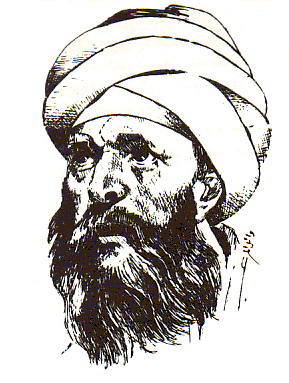
Ibn Hazm
Cordoba, Spain

I offer today another explanation by James V. Schall of theological voluntarism, which he expressed in an article titled "Regensburg Revisited: The Roots of Islamic Violence" (The Catholic Thing, October 1, 2013):
In its Muslim form, [theological voluntarism] . . . seems to be rooted in al-Ghazali and in Ibn Hazm, to whom Benedict referred. In Islam, the notion that God is limited by anything, even His own decrees or reason, is seen to be an insult to Allah. Allah can do the opposite of what he commands. He can call good evil and evil good. He is under no obligation to reveal truth to man. And if he does, he can change his mind and will the opposite later on. These positions are spelled out carefully in the Regensburg Lecture.

Thus, the philosophic root of violence means that such violence used to convert people is perfectly legitimate if Allah commands it, which he appears to do. To deny this possibility as "irrational" would be itself to blaspheme. We would claim that reason could limit the freedom of Allah to which we are to submit ourselves as the only reality to which we need to pay attention.
A question arises: Do al-Ghazali and in Ibn Hazm speak for Islam itself in their understanding of Allah's nature as arbitrary will?

Labels: , , , ,

Thursday, November 08, 2007

"Islamic ethics tends toward extreme theological voluntarism."

Qur'an, Ninth Century
إِنَّمَا قَوْلُنَا لِشَيْءٍ إِذَا أَرَدْنَاهُ أَن نَّقُولَ لَهُ كُن فَيَكُونُ
"For to anything which We have willed,
We but say the word, 'Be', and it is."
(Yusuf Ali, translator, Ayah 40, Qur'an)
Small Telyashayakh Mosque, Tashkent
(Image from Wikipedia)

The heading to this day's blog entry comes from an article by Daniel W. Brown.

You may recall that I cited him yesterday on Islamic divine voluntarism. Who, therefore, is Daniel W. Brown, and what are his credentials? According to Cultural Encounters: A Journal for the Theology of Culture, Dr. Brown has the following credentials:

Dr. Daniel Brown has lived in Egypt and in Pakistan where he was born and spent his first eighteen years. In 1993 he received his Ph.D. in Islamic Studies from the University of Chicago. He has been a visiting scholar at the International Islamic University in Islamabad, the Institute of Islamic Culture in Lahore, and Cairo University and has taught Islamic Studies at Mount Holyoke, Amherst and Smith Colleges.

Since 1997 he has been Pastor of Stony Brook Community Church in South Hadley, Massachusetts. He is the author of Rethinking Tradition in Modern Islamic Thought (Cambridge, 1999) and A New Introduction to Islam (Blackwell, 2003).
From this information, I'd say that Dr. Brown appears reputable and trustworthy.

With that in mind, let me return to the passage that I cited yesterday, within the context of the passage in which it occurs:

Islam might be considered the defining case of ethical voluntarism. Among most Sunni Muslim scholars, past and present, voluntarism has been an undisputed assumption of Islamic ethical theory, finding reflection in Islamic credal formulations.
We confess that the decision concerning good and evil wholly depends on Allah. For whoever should say that the decision regarding good and evil depends upon another than Allah would thereby be guilty of unbelief regarding Allah, and his confession of the unity of Allah would become invalid. (Wasiyat Abi Hanifa, art. 6. Cited in A.J. Wensinck, Muslim Creed: Its Genesis and Historical Development (London: Frank Cass & Co., 1965), 126)
Ibn Hazm (d. 1064) offers the following stark elaboration of the majority position:

If God the Exalted had informed us that he would punish us for the acts of others . . . or for our own obedience, all that would have been right and just, and we should have been obliged to accept it. (Ibn Hazm, al-fisal fi'l-milal wa-l-ahwa' wa-n-nihal, 5 vols. (Cairo, 1890-1903), 3:92. Cited in Hourani, Reason and Tradition in Islamic Ethics (Cambridge: Cambridge University Press, 1985), 174)
As Ibn Hazm's statement implies, and as Hourani points out, Muslim theologians, including al-Ash'ari (d. 935), Ibn Hazm and al-Ghaziili (d. llll), did not shy away from the most extreme consequences of voluntarism: Should God have commanded theft and idolatry it would have been right for humans to commit them. (Hourani, Reason and Tradition, 59)

Ethical voluntarism reinforces and is reinforced by the general tenor of Ash'arite theology, with its characteristic emphasis on the overwhelming power and sovereignty of God at the expense of human freedom. In the words of a standard credal formulation: "Allah has created the creatures, who are devoid of power because they are weak and impotent, whereas Allah is their creator and their sustenance; as He says: 'It is God who created you, who fed you, who, later, will cause you to die, and then will make you alive'" (Wasiyat Abi Hanifa, art. 12, in Wensinck, Muslim Creed, 126). Voluntarism accords well with such a view of the overwhelming power of the creator and the utter dependence of the creature. Further, voluntarism grants to God complete freedom -- He is unbound by any external standard of good, evil or justice. (Daniel W. Brown, "Islamic Ethics in Comparative Perspective," The Muslim World, Volume 89, Number 2, April 1999, pages 183-4)
Dr. Brown was writing this in 1999, two years prior to September 11, 2001, so he had no obvious axe to grind, and since he seems to have credentials and to be trustworthy, I see no reason to discount his presentation of the standard Sunni Muslim view of Allah's ethical directives as voluntarist and his treatment of Ibn Hazm's view as normative.

Now, this does not mean that a Muslim can do whatever he pleases, so I don't entirely agree with my friend Bill Vallicella's formulation of the problem:

The Muslim view is quite 'chilling' if one thinks about it. If God is not contrained by anything, not logic, not morality, then to use the words but reverse the sense of the famous Karamazov passage, "everything is permitted." In other words, if the Muslim god exists then "everything is permitted" just as surely as "everything is permitted" if the Christian god does not exist. In the latter case, everything is permitted because morality has no foundation. In the former case, everything is permitted because morality's foundation is in Absolute Whim.

To put it in another way, a foundation of morality in unconstrained and unlimited will is no foundation at all.

To 'feel the chill,' couple the Muslim doctrine about God with the Muslim literalist/fundamentalist doctrine that his will is plain to discern in the pages of the Koran. Now murder can easily be justified, the murder of 'infidels' namely, on the ground that it is the will of God. (William F. Vallicella, "Islam and the Euthyphro Problem," Maverick Philosopher, November 5, 2007)
Although one can conclude from Islamic divine voluntarism that 'everything is permitted' to Allah, one cannot infer that 'everything is permitted' to those who submit to Allah. Muslims must follow Allah's ethical directives . . . whatever they happen to be.

As to precisely what Allah's ethical commands entail . . . well, that is the 72-virginal-houri question.

Labels: , , , , , , , , , , ,

Wednesday, November 07, 2007

Divine Voluntarism: Ibn Hazm Not Normative for Islam?

Against divine voluntarism?
(Image from al-Ghazali Website)

Time is short, but scholarship is long.

I'd have more to say, but I have to prepare for my day, so let me just cite a few sources for us all to chew on.

I received a courteous rejoinder from a certain JDsg, who took issue with the view that Ibn Hazm's opinion is the normative one in Islam:
No, in fact, it's the other way around. One of the things that irritated Muslims about the Pope's speech was that he was using the position of a very marginal scholar to represent Islam as a whole. As the open letter to the Pope, signed by 38 Muslim scholars, points out:
"In the Islamic spiritual, theological and philosophical tradition, the thinker you mention, Ibn Hazm (d. 1069 CE), is a worthy but very marginal figure, who belonged to the Zahiri school of jurisprudence which is followed by no one in the Islamic world today. If one is looking for classical formulations of the doctrine of transcendence, much more important to Muslims are figures such as al-Ghazali (d. 1111 CE) and many others who are far more influential and more representative of Islamic belief than Ibn Hazm."
Which is why I was a little surprised by this post and the other, where you were relying fairly heavily on Ibn Hazm for your argument.
To this, I replied:
Thanks, JDSG, for the comment. I relied on Ibn Hazm because he was cited in the articles and because Aref Ali Nayed seems to have accepted Ibn Hazm's view on the 'nature' of Allah as correct.

Nayed doesn't dispute Ibn Hazm's views (not in what I've read), but argues instead that the Christian view of God is also just as voluntarist as the Muslim view of Allah.

On this point, I think that Nayed is wrong -- but he's right that one also finds these voluntarist strains in Christianity. That's the danger inherent in what the Pope referred to as 'dehellenization'.

I'll continue looking into this issue. You mention al-Ghazali. Is al-Ghazali's view actually less voluntarist than Ibn Hazm's? Or does he simply prefer not to express himself so radically as Ibn Hazm does?

Aside from the extreme manner in which Ibn Hazm expressed himself, are Muslim views on theology any less voluntarist?

Can you cite a specific statement by al-Ghazali to clarify this?
I've not had much time to look into al-Ghazali's position on divine voluntarism, but I've located some tantilizing passages by scholars.

I've found a quote attributed to Daniel Brown, "Islamic Ethics in Comparative Perspective," The Muslim World, 89 (2) (1999), 181–192, which states:
"Ibn Hazm and al-Ghaziili ... did not shy away from the most extreme consequences of voluntarism: Should God have commanded theft and idolatry it would have been right for humans to commit them."
I will have to locate the precise context of this quote and see what Brown says more generally about this issue, but it certainly appears to narrow the difference between Ibn Hazm and al-Ghazali (assuming that al-Ghaziili is not a different figure).

I have also located a passage from a different scholar, Anver M. Emon, "Natural Law and Natural Rights in Islamic Law," that provides more context and notes that al-Ghazali interests himself in the normative value of nature but nevertheless affirms a voluntarist view of Allah:
The normativity of nature is established in the light of a voluntarism that maintains the willfulness of God, denies any obligations on God, yet upholds a teleology linked to a normative nature whose normativity is the product of a willful divine grace. Maslaha [i.e., Arabic مصلحة, 'public interest'] thereby fuses both the empiricism of nature and normative value without indulging in a natural teleology that has the theological implications of imposing on God obligations to do the good. Under al-Ghazali's version of nature, God is not bound to do the good. But He does so out of His choice and will. We as humans can rely on the constancy that is elemental to God's grace, and fuse fact and value to create legal norms through a rational assessment of empirical reality. But we are also aware that God can alter His grace if He chooses. (Anver M. Emon, "Natural Law and Natural Rights in Islamic Law" (pdf), Journal of Law and Religion, Volume 20, Number 2 (2004-2005) 378-379)
I'll have to return to these fascinating passages when I have more time, and I'll also want to address their significance for something that my friend Bill Vallicella has written on this issue over at his blog, Maverick Philosopher.

Labels: , , , , , , , , , ,

Saturday, June 09, 2007

Paul Berman on Tariq Ramadan: Part 3

Our tragic freedom?
(Image from Wikipedia)

A simple remark can sometimes open our eyes to vistas bringing us to know more about who we are by allowing us to see better from where we have come.

Paul Berman, drawing upon Tariq Ramadan's views as a Muslim thinker who can acknowledge some degree of self-doubt but not of a Cartesian doubt concerning God, observes:
The ancient Greek influences on Islam have never allowed for a Promethean spirit of rebellion, and have never allowed for a sense of the tragic. ("Islamist, Journalist, and Defense of Liberalism," pages 16-17)
I want to unpack this remark in a moment, but it requires an overview onto the landscape of Ramadan's thought. Berman opens for us this vista:
[Ramadan tells us that h]e stands ... for "universal values" that are in line with the European Enlightenment. He stands for a rationalism seeded by doubt, though Ramadan prefers to invoke these concepts and beliefs by citing the wisdom of Islamic philosophers instead of their European counterparts. "Doubt did not begin with Descartes," Ramadan instructed [Ian] Buruma. "We have this construction today that the West and Islam are entirely separate worlds. This is wrong. Everything I am doing now, speaking of connections, intersections, universal values we have in common, this was already there in history." So he stands for the commonalities linking the West and Islam -- for the values that everyone ought to share, except that, in his version, he prefers to give these values an Islamic inflection. ("Islamist, Journalist, and Defense of Liberalism," pages 14-15)
The universal values thus diverge somehow, and Ramadan's remark on the divergence suggests at least a distant echo of Samuel Huntington's views on civilizational differences and clashes:
Ramadan does believe that Islam and the West are separate -- even cosmically separate. At least he appears to believe this in Islam, the West, and the Challenges of Modernity. "We are indeed dealing with two different universes of reference," he writes, "two civilizations and two cultures." ("Islamist, Journalist, and Defense of Liberalism," page 16)
But let's not enter the house of Huntington, at least, not yet. Let's follow Berman's summary of Ramadan's views on doubt and difference:
On the topic of rational doubt and Descartes, he invokes the medieval philosopher al-Ghazali, who, in Ramadan's interpretation, proposed arguments that anticipated Descartes by several hundred years. This must be what Ramadan had in mind in pointing out to Buruma that "doubt did not begin with Descartes." But in Islam, the West, and the Challenges of Modernity he goes into more detail, and the details suggest that al-Ghazali's notion of doubt points in one direction and Descartes' in another -- an observation that accords with al-Ghazali's reputation as the medieval philosopher who issued the most formidable challenge to high Islamic rationalism. About al-Ghazali, Ramadan writes, "At first, we can find innumerable correspondences between his thought and that of Descartes. Such correspondences certainly exist, but the frame of reference which gives the solution to going beyond doubt is fundamentally different." ("Islamist, Journalist, and Defense of Liberalism," page 16)
Universality? Difference? What frame of reference restricts doubt in Islam?
In Ramadan's view, ancient Greek influences on Islam have never allowed for the kind of tension or difference between the sacred and the non-sacred that exists in Western thought. The ancient Greek influences on Islam have never allowed for a Promethean spirit of rebellion, and have never allowed for a sense of the tragic. That is because in Islam, as per Ramadan (and here he invokes the medieval philosopher Ibn Taymiyya), the zone of the sacred contains only a single concept, which is tawhid, or the oneness of God. Tawhid leaves no room for tensions, rebellions, or doubts. A deep and tragic sense of doubt is not even a conceptual possibility. Buruma in the Times magazine pursued this philosophical matter sufficiently at least to ask Ramadan if he has "ever experienced any doubts himself." Ramadan replied: "Doubts about God, no." And Buruma seems not to have realized that, in responding with this easy certainty, Ramadan was surely offering more than a self-confident autobiographical observation. Doubt, in Ramadan's interpretation, can exist only within the limits allowed by tawhid--meaning that, for a proper Muslim, doubts about God are literally inconceivable. A Muslim, in Ramadan's formulation, may forget, but a Muslim cannot doubt. ("Islamist, Journalist, and Defense of Liberalism," pages 16-17)
A Muslim may forget God, but no Muslim can doubt, for the framework of God's oneness leaves no room for that sort of tragic doubt at the core of the West's Promethian rebellion:
The ancient Greek influences on Islam have never allowed for a Promethean spirit of rebellion, and have never allowed for a sense of the tragic. ("Islamist, Journalist, and Defense of Liberalism," pages 16-17)
Prometheus, as everyone knows, stole fire from the gods and brought it to mankind, a crime for which he was punished by being fettered to a cliff high up in the Caucasus Mountains, where an eagle (or a vulture) would daily tear out his liver and devour it before his eyes. Such was the judgement of Zeus. Just? Unjust? That was the question.

Translated into Christian terms, Prometheus took on an ambiguity beyond what he had stood for in the Greek myth. Who was Prometheus? A symbol of Satan in his rebellion against God? Or of us in ours?

In John Milton's Paradise Lost 9.716-720, Satan tempts Eve to rebellion by questioning the existence of The God through subtly insinuating the plural "Gods":
And what are Gods that Man may not become
As they, participating God-like food?
The Gods are first, and that advantage use
On our belief, that all from them proceeds;
I question it... (PL 9.716-720)
This questioning leads to a tragic human fall replicating Satan's own tragic fall, and the old story retold by Milton contains within it the West conception of itself as free to doubt even to the point of rebellion, a realm of freedom that may lead one toward tragic consequences from which one cannot escape ... unless, perhaps, through even more radical doubt.

This is the narrative of Modernity's rebellious emergence from the Medieval worldview. Is it a tragic rebellion, a fall from which we cannot recover except by repenting and asking to be let back in? Or a successful rebellion that has freed us from restrictions self-imposed because there never was, really, that sort of God that the Medieval world believed in.

Either way, the West affirms the fact of freedom, of rebellion, of doubt.

Islam, by contrast, allows no freedom, no rebellion, no doubt about Allah. For Islam, Satan is not the Great Rebel but merely the Tempter, and humanity does not rebel and fall but -- tempted by Satan -- merely forgets Allah and sins against Him out of forgetfulness. There's no tragedy, just a little stumble, and one can pick oneself back up, ask forgiveness, and go on in submission to Allah ... until the next stumble.

That's what Ramadan believes, without any doubt.

Labels: , , , ,