Wednesday, November 07, 2007

Divine Voluntarism: Ibn Hazm Not Normative for Islam?

Against divine voluntarism?
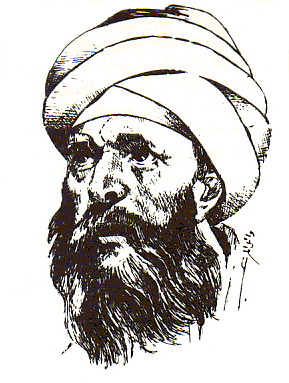
(Image from al-Ghazali Website)

Time is short, but scholarship is long.

I'd have more to say, but I have to prepare for my day, so let me just cite a few sources for us all to chew on.

I received a courteous rejoinder from a certain JDsg, who took issue with the view that Ibn Hazm's opinion is the normative one in Islam:
No, in fact, it's the other way around. One of the things that irritated Muslims about the Pope's speech was that he was using the position of a very marginal scholar to represent Islam as a whole. As the open letter to the Pope, signed by 38 Muslim scholars, points out:
"In the Islamic spiritual, theological and philosophical tradition, the thinker you mention, Ibn Hazm (d. 1069 CE), is a worthy but very marginal figure, who belonged to the Zahiri school of jurisprudence which is followed by no one in the Islamic world today. If one is looking for classical formulations of the doctrine of transcendence, much more important to Muslims are figures such as al-Ghazali (d. 1111 CE) and many others who are far more influential and more representative of Islamic belief than Ibn Hazm."
Which is why I was a little surprised by this post and the other, where you were relying fairly heavily on Ibn Hazm for your argument.
To this, I replied:
Thanks, JDSG, for the comment. I relied on Ibn Hazm because he was cited in the articles and because Aref Ali Nayed seems to have accepted Ibn Hazm's view on the 'nature' of Allah as correct.

Nayed doesn't dispute Ibn Hazm's views (not in what I've read), but argues instead that the Christian view of God is also just as voluntarist as the Muslim view of Allah.

On this point, I think that Nayed is wrong -- but he's right that one also finds these voluntarist strains in Christianity. That's the danger inherent in what the Pope referred to as 'dehellenization'.

I'll continue looking into this issue. You mention al-Ghazali. Is al-Ghazali's view actually less voluntarist than Ibn Hazm's? Or does he simply prefer not to express himself so radically as Ibn Hazm does?

Aside from the extreme manner in which Ibn Hazm expressed himself, are Muslim views on theology any less voluntarist?

Can you cite a specific statement by al-Ghazali to clarify this?
I've not had much time to look into al-Ghazali's position on divine voluntarism, but I've located some tantilizing passages by scholars.

I've found a quote attributed to Daniel Brown, "Islamic Ethics in Comparative Perspective," The Muslim World, 89 (2) (1999), 181–192, which states:
"Ibn Hazm and al-Ghaziili ... did not shy away from the most extreme consequences of voluntarism: Should God have commanded theft and idolatry it would have been right for humans to commit them."
I will have to locate the precise context of this quote and see what Brown says more generally about this issue, but it certainly appears to narrow the difference between Ibn Hazm and al-Ghazali (assuming that al-Ghaziili is not a different figure).

I have also located a passage from a different scholar, Anver M. Emon, "Natural Law and Natural Rights in Islamic Law," that provides more context and notes that al-Ghazali interests himself in the normative value of nature but nevertheless affirms a voluntarist view of Allah:
The normativity of nature is established in the light of a voluntarism that maintains the willfulness of God, denies any obligations on God, yet upholds a teleology linked to a normative nature whose normativity is the product of a willful divine grace. Maslaha [i.e., Arabic مصلحة, 'public interest'] thereby fuses both the empiricism of nature and normative value without indulging in a natural teleology that has the theological implications of imposing on God obligations to do the good. Under al-Ghazali's version of nature, God is not bound to do the good. But He does so out of His choice and will. We as humans can rely on the constancy that is elemental to God's grace, and fuse fact and value to create legal norms through a rational assessment of empirical reality. But we are also aware that God can alter His grace if He chooses. (Anver M. Emon, "Natural Law and Natural Rights in Islamic Law" (pdf), Journal of Law and Religion, Volume 20, Number 2 (2004-2005) 378-379)
I'll have to return to these fascinating passages when I have more time, and I'll also want to address their significance for something that my friend Bill Vallicella has written on this issue over at his blog, Maverick Philosopher.

Labels: , , , , , , , , , ,

Tuesday, November 06, 2007

Yet More on Limits to the Divine Will

Bowing to Allah's Arbitrary Will?
(Image from Wikipedia)

By looking around more at the Chiesa website, I found a fuller version of Aref Ali Nayed's views. These occur in the same passage that I quoted from yesterday, but on a different Chiesa webpage, "Two Muslim Scholars Comment on the Papal Lecture in Regensburg" (Sandro Magister, Chiesa, October 4, 2006), where Nayed comments upon a passage from the Pope's Regensberg lecture:
Benedict XVI, being a scholar of medieval theology knows that he can not deny certain facts:
"In all honesty, one must observe that in the late Middle Ages we find trends in theology which would sunder this synthesis between the Greek spirit and the Christian spirit. In contrast with the so-called intellectualism of Augustine and Thomas, there arose with Duns Scotus a voluntarism which, in its later developments, led to the claim that we can only know God's voluntas ordinata. Beyond this is the realm of God's freedom, in virtue of which he could have done the opposite of everything he has actually done. This gives rise to positions which clearly approach those of Ibn Hazm and might even lead to the image of a capricious God, who is not even bound to truth and goodness. God's transcendence and otherness are so exalted that our reason, our sense of the true and good, are no longer an authentic mirror of God, whose deepest possibilities remain eternally unattainable and hidden behind his actual decisions."
This passage, while serving its author's ultimate goal of undermining the theologies mentioned in it, does at least show that Benedict XVI is somewhat aware that other possible theologies do exist, and that Muslim theologians were not alone in caring about the affirmation of God’s sovereignty against human pretensions to govern Him with human criteria.
Here, Nayed appears to be affirming that the voluntarist views of such Nominalists as Duns Scotus are precisely the same as the Muslim view of Allah, and if that is so, then Islam does hold that Allah can willfully flout that principle of noncontradiction. Nayed then dryly observes of the Pope that, "Unfortunately, he goes on to totally undermine such theologies as not being the true 'faith of the Church'." I can see that this is unfortunate for Nayed's claim that the Christian and Muslim views of the deity are identical, but it's certainly not 'unfortunate' for the Pope's argument.

Nayed's larger article is worth reading (despite its strongly ironic but misplaced jabs at Catholicism for its violent history and its deplorable Eurocentrism) but still doesn't seem to me to directly engage with the Pope's point about reason and the nature of God . . . or Allah.

Labels: , , , , , , , , ,

Monday, November 05, 2007

More on Limits to the Divine Will

Open to dialogue...
(Image from Wikipedia)

Concerning yesterday's blog entry on God's will being bound by limits that are grounded in God's nature, I've done a bit more digging about online and found an interesting exchange at the Chiesa website between a Catholic scholar of Medieval philosophy and theology, Alessandro Martinetti, and a learned Muslim theologian Aref Ali Nayed: "The Church and Islam: A Sprig of Dialogue Has Sprouted in Regensburg" (Sandro Magister, Chiesa, October 30, 2006)

On this site, Sandro Magister posts material from both Martinetti and Nayed. Apparently, Nayed maintains a website of his own and had responded to Pope Benedict XVI's remarks on Ibn Hazm's supposed 'voluntarism', namely, the view that Allah's will is supremely unlimited -- that He is free to contradict himself if He wishes. Nayed's initial response is not cited in full by Magister, but Martinetti quotes from it in his article:
"Unbridled will or Logos? The God of Islam and the Christian God," Alessandro Martinetti
In this article, Martinetti first quotes Nayed's own words:
Reason as a gift from God can never be above God. That is the whole point of Ibn Hazm; a point that was paraphrased in such a mutilated way by Benedict XVI's learned sources. Ibn Hazm, like the Asharite theologians with whom he often contended, did insist upon God's absolute freedom to act. However, Ibn Hazm did recognize, like most other Muslim theologians that God freely chooses, in His compassion towards His creatures, to self-consistently act reasonably so that we can use our reason to align ourselves with His guidance and directive.

Ibn Hazm, like most other Muslim theologians, did hold that God is not externally-bound by anything, including reason. However, at no point does Ibn Hazm claim that God does not freely self-commit Himself and honors such commitments Such divine free-self-committing is Qur'anically propounded 'kataba rabukum ala nafsihi al-Rahma' (Your Lord has committed Himself to compassion). Reason need not be above God, and externally normative to Him. It can be a grace of God that is normative because of God’s own free commitment to acting consistently with it.

A person who believes the last proposition need not be an irrational or un-reasonable human-being, with an irrational or whimsical God! The contrast between Christianity and Islam on this basis is not only unfair, but also quite questionable.

Granted that the Pontiff is striving to convince a secular university that theology has a place in that reason-based setting. However, this should not go so far as to make God subject to an externally-binding reason. Most major Christian theologians, even the reason-loving [Thomas] Aquinas never put reason above God.
Martinetti then observes:
In Nayed's view, then, saint Thomas "never put reason above God." But not placing reason above God is not the same thing as asserting, as Nayed does, that "God is not externally bound by anything, including reason," and that reason "can be a grace of God that is normative because of God's own free commitment to acting consistently with it."

Saint Thomas would never have subscribed to these assertions; on the contrary, he vigorously opposed them. And together with him, the Catholic magisterium does not agree with them, but disputes them. It thus rejects the depiction of a God who "freely chooses, in his compassion towards his creatures, to act reasonably in consistency with himself so that we can use our reason to align ourselves with His guidance and directives."

If asserting that reason is not normative for God, and that God is consistent with himself only out of a supremely free decision and is not externally bound to reason; if this is the same as asserting -- as it seems to me that Nayed does -- that God could exist and act in disdain of reason if only he wished to do so by an act of supreme and limitless freedom, then it is opportune to clarify that Thomas, and with him the Catholic magisterium, rejects this conviction, glimpsing in this an irrational voluntarism incompatible with right reason and with the Catholic faith, as the pope himself remarks in his "lectio" in Regensburg....
Martinetti's point would seem to be that in the Catholic view, reason is not something external to and higher than God that God must submit to, nor is reason merely a means of relating to humanity that God arbitrarily, and in an utterly unconstrained fashion, chooses to adopt.

Rather, God is rational because He is consistent with His own nature, which is a rational nature.

To Martinetti's point, Nayed responds in a follow-up article:
"Our God and Your God is One," by Aref Ali Nayed
In this, he insists that Aquinas and Ibn Hazm agree on God's unconstrained will:
Aquinas affirms, just as most Muslim theologians do, that God is omnipotent and that His Power and Will are utterly efficacious: "God is bound to nobody but Himself. Hence, when it is said that God can only do what He ought, nothing else is meant by this than that God can do nothing but what is befitting to Himself, and just".

"Although this order of things be restricted to what now exists, the divine power and wisdom are not thus restricted. Whence, although no other order would be suitable and good to the things which now are, yet God can do other things and impose upon them another order".
Nayed's citation of Aquinas here misses the point made by Martinetti. I think that when Nayed says that Islam maintains that 'Allah is bound to nothing but Himself' (if I may slightly paraphrase Nayed's citation of Aquinas), he means that Allah is bound by nothing but His own divine, unconstrained will. This is not what Aquinas means. When Aquinas says that 'God is bound to nothing but Himself' (again, my paraphrase), he means that God is bound by nothing but His own nature, which is rational.

Nayed has thus misunderstood Aquinas and thereby missed Martinetti's point.

Labels: , , , , , , , , , , , , ,